Professional treatment for Postpartum depression:
Early treatment of postpartum depression is
important for you, your baby, and the rest of your family. The sooner you
start, the more quickly you will recover, and the less
your depression will affect your baby. Babies of depressed mothers can be less attached to their mothers and lag behind developmentally in behavior and mental ability
Treatment choices for postpartum depression include:
- Individual therapy or Counseling -Therapy can be very effective in the treatment of postpartum depression. A good therapist can help you successfully deal with the adjustments of motherhood. If you are experiencing martial difficulties or are feeling unsupported at home, marriage counseling can be very beneficial. Cognitive-behavioral therapy helps you take charge of the way you think and feel.Interpersonal counseling is also a good treatment choice for postpartum depression. (You may find a counselor who offers both cognitive-behavioral therapy and interpersonal counseling.) Interpersonal counseling focuses on relationships and the personal changes that come with having a new baby. It gives you emotional support and helps with problem solving and goal setting. For your partner, counseling may help with the demands of having a new baby. It can also help your partner support you.
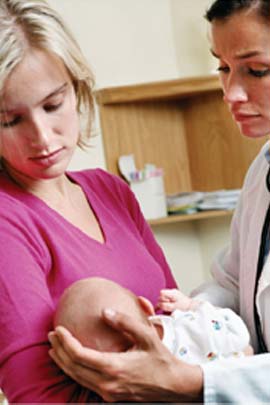
- Hormone therapy – Estrogen replacement therapy sometimes helps with postpartum depression. Estrogen is often used in combination with an antidepressant. There are risks that go along with hormone therapy, so be sure to talk to your doctor about what is best and safest for you.
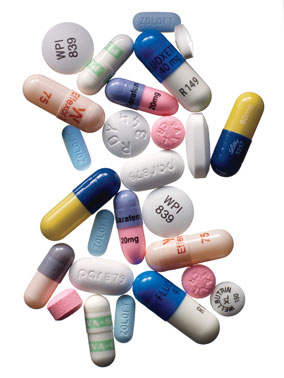
- Antidepressants – For severe cases of postpartum depression where you’re unable to care for herself or her baby, antidepressants may be an option. However, medication use should be accompanied by therapy, as well as close monitoring by a physician.Antidepressants effectively relieves symptoms of postpartum depression for most women. Breast-feeding is also important for your baby, so talk to your doctor and your baby's doctor about an antidepressant medicine you can use while breast-feeding. Certain selective serotonin re uptake inhibitors (SSRIs) are considered relatively safe for use while you are breast-feeding.
Talk to your doctor about your symptoms and decide on what type of treatment is right for you. Counseling and support are considered a first-line treatment for mild to
severe PPD. Women with mild PPD are likely to benefit from counseling alone. Those with moderate to severe PPD are advised to combine counseling with
antidepressant medicine.
Non-Medicinal Ways to battle Postpartum Depression:
Breathing Techniques

- Exercise
Getting into a fitness routine won't just help you shed that leftover baby weight it will also help clear your mind. In her book,Exercise can also help women feel better by melting away the adrenalin produced by anxiety, relieving muscle tension, and encourage better sleep. Exercise is known to promote well-being by releasing endorphins, the chemicals in our brains that are associated with feeling good."

- Support Groups
Sometimes just knowing that you're not alone in your feelings can provide a little lift to your spirit.Postpartum Support International is one such support group that understands the need for communication and friendship during such a difficult time and offers a number of valuable resources ranging from lists of local help centers to education for the families, friends and healthcare providers of women affected by PPD.

- Nutrition
Often new moms are so concerned with making sure the baby is well-fed, she forgets to feed herself. "Basic nutrition, such as nibbling protein throughout the day to help keep the blood sugar even can keep the moods more stable," says Dr. Bennett. "Nutrients like calcium and magnesium will hopefully be in your prenatal vitamin if one is nursing. Folic acid is also very important, as well as the B vitamins. Staying very well hydrated can also help to ease anxiety."
- Omega-3s
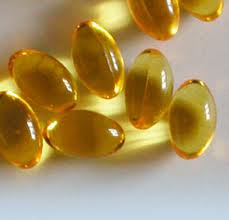
“Omega-3 fatty acids in the form of fish oil with EPA and DHA are very, very important for mom’s mental health,” says Dr. Bennett. “The baby has been taking the omega-3 from mom’s pregnant body, usually depleting her if she’s not taking an extra amount. The baby needs it for IQ, skin, hair and cardiovascular health. Pregnant and nursing mothers need an extra amount. They should be careful that the supplement they take is stellar. If they’re deficient in omega-3 they can be depressed no matter what else they are doing.”
Why You Cannot Wait to Treat Postpartum Depression:
"We're suffering from an illness that cannot be seen," Stone says. "We don't have a fever, swelling, vomiting, or diarrhea. No open wounds that will not heal—at least not the kind you can see with the naked eye. So, many wonder if we're really sick at all."
Postpartum major depression occurs in approximately one of 10 child bearing women and is considerably underdiagnosed. If left untreated, the disorder can have serious
adverse effects on the mother and her relationship with significant others, and on the child's emotional and psychological development. A simple screening instrument can be
used to increase the detection of postpartum major depression. Although few well-controlled studies have been done to support the use of any one modality, the mainstay of
treatment has been antidepressant therapy, alone or in combination with psychotherapy. Plasma concentrations of antidepressant drugs are usually low in the breast-fed infant,
and most studies demonstrate that certain antidepressants can be used during lactation without any important adverse effects on the infant.
link of the article: http://www.aafp.org/afp/1999/0415/p2247.html
References:
- http://www.webmd.com/depression/postpartum-depression/postpartum-depression-treatment-overview
- http://www.mayoclinic.com/health/postpartum-depression/DS00546/DSECTION=treatments-and-drugs
- http://www.health.com/health/condition-article/0,,20188712,00.html
- http://www.postpartum-depression.net/Pecindman.com/Postpartum_Moods.html
- http://www.topnews.in/health/omega-3-fatty-acid-diet-can-make-men-fertile-26700
- http://letopusa.wordpress.com/2012/07/17/get-a-move-on-exercises-to-do-with-your-baby-to-lose-the-baby-weight/
- http://www.parents.com/baby/health/postpartum-depression/ways-to-prevent-postpartum-depression/
- http://www.babyzone.com/mom/postpartum-depression/postpartum-depression-ppd_90948#gallery/omega-3s
