What is Postpartum Depression?

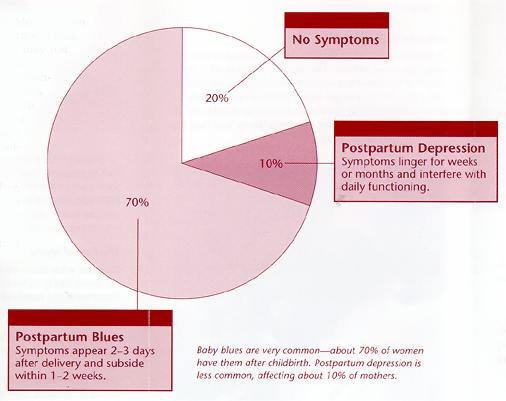
For some women, the feelings of sadness or exhaustion run deeper and last longer than baby blues.About 10% of new mothers experience postpartum depression, which is a true clinical depression triggered by childbirth.Postpartum Depression usually begins 2-3 weeks after child birth but can start any time during the first few days,weeks or months post delivery. It can also happen after miscarriage and stillbirth.Women with postpartum depression have such strong feelings of anxiety,sadness or despair that they have trouble coping with their daily tasks.Women with postpartum depression need treatment with counselling and sometimes medication.Without treatment postpartum depression may become worse or may last longer.
When to Suspect Postpartum Depression:
A new mother may be developing or already have postpartum depression if:
- The baby blues don't go away after 2 weeks.
- Strong feelings of depression and anger come 1-2 months after childbirth
- Feelings of sadness, doubt, guilt, or helplessness seem to increase each week and get in the way of normal functions
- She has trouble concentrating or completing routine tasks.
- She is not able to care for herself or her baby
- Things that used to bring her pleasure no longer do.
- Concern and worry about the baby are too intense, or interest in the baby is lacking.
- She loses her appetite or not feel interested in food
- Anxiety or panic attacks occur. She may be afraid to be left alone in the house with the baby.
- Feels indifferent to her baby or not feel attached or bonded
- Feels overwhelmed by her situation and feel that there is no hope of things getting better
- She fears harming the baby. These feelings are almost never acted on by women with postpartum depression, but they can be scary. These feelings may lead to guilt, which makes the depression worse.
- She has thoughts of self-harm, maybe even suicide.
Dr. Shoshana Bennett speaks about Postpartum Depression:
References:
- http://www.acog.org/~/media/For%20Patients/faq091.pdf?dmc=1&ts=20120826T0753491580 (pdf)
- http://kidshealth.org/parent/emotions/feelings/ppd.html
- http://www.treehousepedi.com/article2.shtml
- http://www.youtube.com/watch?v=yH3WMQO-ooU (video)
- http://www.youtube.com/watch?v=MJ6ALUrwSRM&feature=related (video)
